
Experts say, these leave many matters to the discretionary powers of bureaucrats, rather than providing them explicitly in the rules.
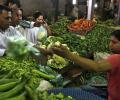
'If you see the composition of items which are causing this spike in prices, most of them have little to do with the kharif harvest, except for pulses and vegetables to some extent.' 'I don't know on what basis the government is claiming that food prices will moderate in the weeks to come.'

A communiqu sent by the department of investment and public asset management (DIPAM) to the heads of all PSUs, said the move would help the government to get predictable and periodic dividends before Budget estimates are firmed up.

According to the law, the contribution "should not be more than 5 per cent of the amount paid to gig workers. The government is likely to start seeking contribution from gig companies towards the fund from April 1, 2021.

The reforms will help FPOs procure directly from farmers, something that they have been pressing for long.

When the Centre tries to encroach upon the subjects that are under the prerogative of the state, or where the centre tries to evade from any responsibility guaranteed to a state through a constitutional provision/obligation, it poses a threat to federalism.

If retrenched workers are unable to reskill within a fixed period of time, they will have to return the money given to them by the government. Moreover, they may be asked to pay back an interest on the sum transferred.
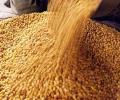
Chana is majorly imported from Australia and Tanzania and it attracts an import duty of 60 per cent. A section of the traders is demanding a reduction in import duty to around 35-40 per cent to tide over any shortage of the commodity as the new crop will start hitting the market only around mid-February.

However, the hike in salary for government officials may take some time as the Centre had earlier this year decided to put a freeze on any hike in the DA of its employees till July, 2021, owing to the Covid-19 pandemic.

However, the government has enacted an important change to the fixed-term employment framework that may help companies in handing out contractual jobs to its existing permanent workforce.

This year, the monsoon was above normal in almost all parts, except in North-West India, which comprises the major grain producing states of Uttar Pradesh, Punjab, Haryana, Rajasthan, along with states such as Himachal Pradesh, the NCR, Uttarakhand, and J&K.
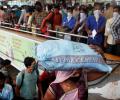
Six months after the lockdown was imposed, two dozen migrant workers were interviewed across five villages of Prayagraj. As the economy opens up, most of them are either hunting for a job or desperately waiting for a phone call from their previous employers. But the bruises of the lockdown are still fresh in their minds. Somesh Jha reports.

The move will help industries in pushing authorities for exemption under various labour laws at a micro-level, along with demanding changes to bring greater flexibility in their operations related to retrenchment, safety standards, and collective bargaining.

While demanding more outdoor air ventilation, the strategy document calls for a structural modification in the workplace.

The government further defended its move to introduce fixed-term employment, insisting that the present system of hiring workers through contractors is exploitative.

Data shows that the current system of decentralised marketing and centralised procurement helps Punjab and Haryana farmers the most, while its efficacy in other states has been poor. Experts and farm leaders say success of the laws rests heavily on implementation.

Former RBI governors Urjit Patel and Raghuram Rajan have also expressed worry about the Mudra scheme, particularly government's target-setting practice and the rising bad loans.
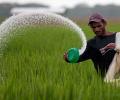
The government's main rate setting panel suggested that this be done in two tranches of Rs 2,500 each in the kharif and rabi seasons.

Foodgrains production in 2020-21 is projected to be a record 144.52 million tonnes, which is 0.80 per cent more than the production in 2019-20.
Almost 63 per cent of the increased allocation of around Rs 1.01 trillion has been spent in the first five months of 2020-21.
 © 2026 Rediff.com - Advertise with us - Disclaimer - Privacy Policy - Sitemap - Feedback - About us - Terms of use - Grievances